
 ZH_CN
ZH_CN


The DDX1 short-circuit current limiter based on micro-explosion technology (referred to as DDX1 current limiter) uses micro-explosion technology to quickly cut the main conductive circuit (the micro-explosion device is controlled by a special electronic controller), so that the fault current is rapidly transferred to the special high-voltage current-limiting fuse branch. The fuse completes the current-limiting breaking of the fault current, and limits the peak value of the first half-wave of the fault current to a low level. This not only solves the dynamic stability problem of the power system, but also solves the thermal stability problem of the power system.
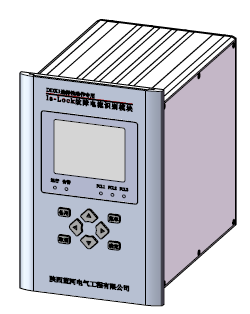
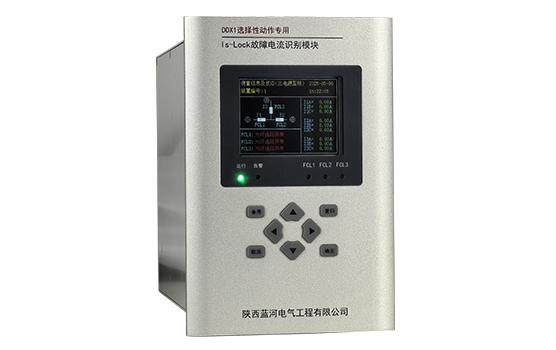
The Is-Lock fault current identification module (referred to as Is-Lock) is an auxiliary decision-making device with action direction selection specially developed for the DDX1 current limiter. In order to reduce the unnecessary action of the DDX1 current limiter and eliminate the resulting system disturbances and operation and maintenance costs, in operating conditions with action selectivity such as the tie position of multi-section busbars in parallel operation, new power supply connection, interconnection of two power supplies, and star interconnection of three power supplies, the Is-Lock can provide accurate and reliable selective action signals (auxiliary criteria) for the DDX1 current limiter. This enables the control strategy of the micro-explosion type DDX1 current limiter installed in special distribution systems to have both overcurrent tripping and action direction selection, optimizing the short-circuit protection effect of the DDX1 current limiter on the distribution system and significantly reducing operation and maintenance costs.

Principle of Is-Lock Fault Current Identification Module
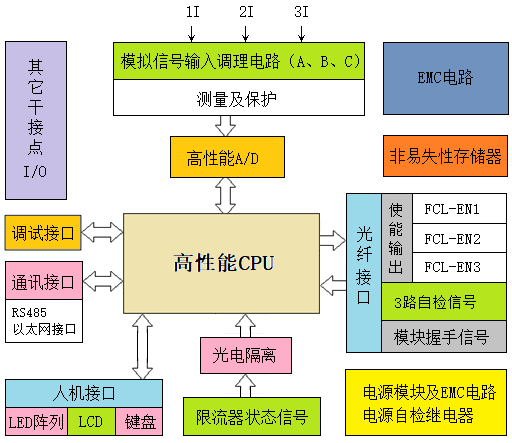
The Is-Lock can introduce up to three branch currents (1I, 2I, and 3I) of closely related nodes at most. Each branch includes three phases (A, B, and C). The collected current signals are converted and modulated inside the module to obtain voltage signals within a suitable range. After 16-bit high-precision A/D analog-to-digital conversion, they are input into a high-performance CPU for rapid analysis and calculation. A single module is simultaneously configured with a current limiter output enable signal and a handshake signal for communication between modules. The Is-Lock will only send an enable signal to the corresponding port when the current direction criterion, current characteristic value threshold criterion, and handshake signal criterion are all satisfied. This signal is logically operated with the criterion signal of the high-voltage side electronic controller of the DDX1 current limiter to determine whether to output a tripping command.