

 ZH_CN
ZH_CN


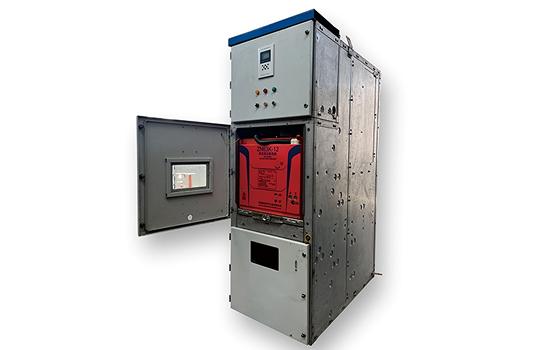
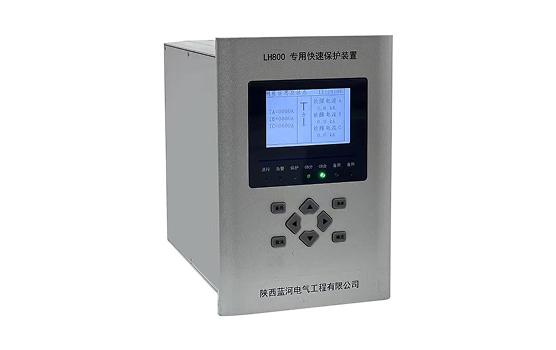
Concept 1: Our country has fully entered the industrialization and informatization era from the agricultural age. In distribution networks, the temporary voltage drop or short-term interruption associated with grid short-circuit faults can have increasingly unacceptable impacts and losses on industrial production.
Concept 2: In distribution networks, traditional disconnection devices often require hundreds of milliseconds (where the trip time of circuit breakers generally exceeds 30ms, and the fault response time of traditional relay protection devices is about 40 to 60ms) from fault recognition to fault removal. During this period, the temporary voltage drop or short-term interruption will cause interruptions in the production process of sensitive users, leading to huge economic losses and also negatively affecting the stability of the grid.
Concept 3: Is there an applicable and low-cost solution to eliminate or mitigate the above problems? The answer is affirmative; the LH900 rapid disconnection complete set of equipment is one such optimized solution.
Technical Features:
l LH900 cabinet: Rated parameters 12kV/1250A-31.5kA, the cabinet structure is the same as KYN28;
l LH900 internal quick circuit breaker: fully compatible with the installation dimensions of ZN63-12 (VD4 or VS1);
l LH900's fast protection device: adopts a multi-criteria logic combination, with a response time of less than 3ms;
l The fast circuit breaker uses a dedicated vacuum arc extinguishing chamber (solid-sealed pole column), with the ability to interrupt DC components up to 95%;
l The improved permanent magnet mechanism is adopted to achieve a trip time of 3±0.5ms for the fast circuit breaker;
l The total time from the occurrence of fault current to the removal of fault is less than 30ms;
l Mechanical/electrical dual interlocking to eliminate human operational errors;
l Indoor use, at an altitude of 1000m or below, without condensation.
Application Effect:
l It can improve the transmission capacity and stability of the power grid;
l Quickly isolate the faulty area to ensure the voltage quality of non-faulty areas to the greatest extent;
l Significantly reduce the energy consumption at fault points, thereby reducing the damage to faulty equipment, and consequently shortening the repair time of faulty equipment, lowering maintenance costs, and reducing power outage duration;
l Avoid significant economic losses to sensitive users due to voltage drops or interruptions during power grid failures;
l For users with a large number of impact loads (such as electric motors), it is possible to avoid the occurrence of excessive load tripping caused by the pull-down of busbar voltage below 70% Un during the restart of equipment in non-fault areas after fault isolation, thereby avoiding serious 'secondary disasters' that could affect the production process;
l Located at the connection point of the user's power grid (such as photovoltaic or wind power), it can quickly isolate the impact of internal faults in the user's power grid on the main grid.